


ASMR sounds simple until you try to record it. Whisper into your phone and you might hear air conditioning in the background. Tap your fingers on a table and the microphone may barely capture the tiny details. Turn the gain up and suddenly you’re listening to hiss instead of ASMR.
That’s why choosing the right microphone matters. ASMR is different from normal podcasting.
A podcast microphone mainly needs to capture a clear voice. An ASMR microphone may need to capture extremely quiet sounds such as breathing, brushing, scratching, tapping, mouth sounds, and whispers.
Some creators also want binaural audio that makes listeners feel as though sounds are moving around their heads.
What is the Best ASMR Microphones?
The best microphone depends on the type of ASMR you want to create. Here are some of the best options.
1. RØDE NT1 5th Generation – Best Overall ASMR Microphone
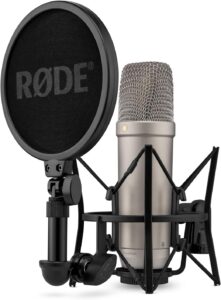
For most people building a serious ASMR recording setup, I’d start with the RØDE NT1 5th Generation.
The biggest reason is noise. ASMR often involves recording extremely quiet sounds. When you increase microphone gain to capture those sounds, the microphone’s own noise can become more noticeable.
The NT1 5th Generation has an exceptionally low rated self-noise of just 4 dBA. That’s excellent for whispering and other quiet recordings.
It uses a one-inch condenser capsule with a cardioid polar pattern and has a frequency response of 20 Hz to 20 kHz.
There’s another major advantage. You get both XLR and USB connectivity. Beginners can connect it directly to a computer through USB-C. More advanced creators can connect it through XLR to an audio interface or mixer.
When using USB, the microphone also supports 32-bit float recording. For an ASMR creator dealing with everything from tiny whispers to suddenly loud tapping, that flexibility can be useful.
Best for: Whispers, tapping, scratching, roleplay, and general ASMR recording.
2. 3Dio Free Space – Best Binaural ASMR Microphone
If you’ve watched ASMR for a while, you’ve probably seen microphones with human-shaped ears.
There’s a reason for that. Binaural ASMR attempts to recreate the experience of having sound happen around your head.
A creator might whisper into your left ear. Then move behind you. Then whisper into your right ear. Listen through headphones and the experience can feel surprisingly realistic. The 3Dio Free Space is designed around this idea.
Instead of one traditional microphone capsule, you get artificial ears with microphone capsules positioned inside them.
The creator can whisper directly into an ear, brush around it, tap it, or move objects from side to side. This creates the immersive ear-to-ear experience that has become a major part of ASMR.
The downside is specialization. A 3Dio isn’t necessarily what I’d buy as my only general-purpose studio microphone. It’s a tool designed for binaural recording. If binaural ASMR is the entire point of your channel, however, that’s exactly what you want.
Best for: Ear-to-ear whispering, ear cleaning, brushing, and binaural ASMR.
3. Audio-Technica AT2020 – Best Budget ASMR Microphone
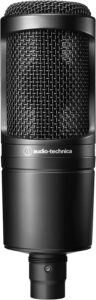
You don’t need an expensive binaural setup to start making ASMR. The Audio-Technica AT2020 is one of the most popular affordable studio condenser microphones and makes a sensible starting point.
It has a cardioid polar pattern and a frequency response of 20 Hz to 20 kHz. Because it’s a condenser microphone, it’s sensitive enough for detailed recording.
That can work well for whispers, tapping, scratching, page turning, and other common triggers.
The cardioid pattern also helps reduce sounds arriving from the sides and rear compared with sounds directly in front of the microphone.
That’s useful in a home studio.
However, the standard AT2020 uses XLR. You’ll need an audio interface capable of providing 48V phantom power. That increases the total cost of the setup.
Still, if you’re building a traditional XLR recording system and want an affordable first condenser microphone, the AT2020 remains an excellent option.
Best for: Beginners and budget ASMR setups.
4. RØDE NT-USB+ – Best USB Microphone for ASMR
Not everyone wants an audio interface. Maybe you want to connect one microphone to your computer and start recording. That’s where a USB condenser microphone makes sense.
The RØDE NT-USB+ is designed for direct computer recording while still giving you the type of large-diaphragm condenser setup commonly associated with studio microphones.
USB simplifies everything. You don’t need to understand phantom power. You don’t need a separate interface. You don’t need to choose a microphone preamp.
Connect the microphone, select it in your recording software, set your levels, and start experimenting. That’s especially attractive for new ASMR creators.
You can spend your time learning microphone placement and trigger techniques instead of troubleshooting an entire recording chain.
Best for: Beginners who want a simple USB ASMR setup.
5. Blue Yeti – Best ASMR Microphone for Beginners
There’s a reason you’ve seen the Blue Yeti in so many early ASMR videos. It’s incredibly easy to experiment with. The big advantage is multiple pickup patterns. Unlike a basic cardioid microphone, the Yeti lets you change how it captures sound.
Stereo mode is particularly interesting for ASMR because it allows you to create a sense of left and right movement.
You can move a brush around the microphone. Tap on different sides. Whisper from different positions. And experiment with spatial effects without buying two separate microphones.
You can also use cardioid mode when you simply want to sit in front of the microphone and whisper.
The Yeti isn’t necessarily the quietest or most sophisticated ASMR microphone available. But for learning what type of ASMR you enjoy creating, it’s extremely flexible.
Best for: New creators experimenting with different ASMR styles.
6. Neumann KU 100 – Best Professional Binaural ASMR Microphone
Then there’s the extreme end. The Neumann KU 100 isn’t simply a microphone with two fake ears. It’s a professional dummy-head binaural recording system.
Two omnidirectional condenser capsules are built into artificial ears on a head-shaped enclosure.
The goal is to reproduce the way a human listener experiences sound in a real environment.
When you listen to a KU 100 recording through good headphones, sounds can appear to exist around you rather than simply coming from the left and right channels.
That’s perfect for advanced binaural ASMR. A creator can move around the dummy head, whisper into different ears, manipulate objects behind it, and create an unusually realistic three-dimensional experience.
The problem?
This is professional equipment. It’s far beyond what most beginner ASMR creators need.
But if you’re asking what’s possible at the high end of binaural recording, the KU 100 belongs in the conversation.
Best for: Professional binaural ASMR and immersive audio.
7. Two-Microphone Stereo Setup – Best for Advanced ASMR Creators
You don’t necessarily need a dedicated binaural microphone to create spatial ASMR. Another option is using two traditional condenser microphones.
Place one on the left. Place the other on the right. Record them to separate channels. Pan one channel left and the other right during recording or editing. Now you can create a stereo ASMR setup using conventional studio microphones.
This approach has some major advantages. You can experiment with microphone spacing and positioning. You can upgrade individual microphones.
And when you’re not recording ASMR, the microphones remain useful for vocals, instruments, podcasts, and other studio work.
The disadvantage is complexity. You’ll need an audio interface with at least two microphone inputs. You’ll need two stands. Two XLR cables. And you’ll need to understand stereo recording. But for an experienced creator, this approach gives you enormous flexibility.
Best for: Advanced creators who want a customizable stereo setup.
What Makes a Good ASMR Microphone?
Sensitivity matters, but it isn’t the whole story. ASMR creators frequently record quiet sounds. That means microphone self-noise becomes especially important.
Imagine recording a barely audible whisper. You turn up the gain. The whisper becomes louder. Unfortunately, so does the microphone’s noise floor.
That’s why a microphone such as the RØDE NT1 5th Generation is interesting. Its rated self-noise is only 4 dBA.
You also want a microphone capable of capturing small details. The tiny texture of fingers rubbing together is part of the experience. So is the difference between tapping on wood, glass, plastic, and metal.
Condenser vs Dynamic Microphones for ASMR
For most traditional ASMR, I’d choose a condenser microphone. Condenser microphones are generally sensitive and detailed.
That’s useful when you’re trying to capture whispers, gentle scratching, brushing, and quiet tapping.
Dynamic microphones are excellent for podcasting and broadcasting, particularly in imperfect rooms. But their strengths aren’t always what ASMR creators need.
A microphone such as the Shure SM7B can sound excellent on a whispered voice, but if your goal is capturing tiny object sounds from farther away, a sensitive condenser may be easier to work with.
What Is Binaural ASMR?
Binaural ASMR tries to recreate how humans naturally hear sound. We have two ears separated by our head.
A sound arriving from your left reaches your left and right ears slightly differently. Your brain uses those tiny differences to determine where the sound is coming from.
Binaural microphones imitate this process. Systems such as the Neumann KU 100 place microphones inside artificial ears.
When you listen to the recording through headphones, your brain receives spatial information similar to what it would hear in the real world.
That’s why binaural ASMR can feel so immersive. For the effect to work properly, use headphones.
Mono vs Stereo for ASMR
You don’t have to record ASMR in stereo. A single cardioid microphone can produce fantastic whisper and trigger videos.
That’s mono ASMR. It’s simple and inexpensive. Stereo becomes useful when movement is part of the experience.
You can move sounds from left to right or create a wider environment around the listener. Binaural goes further by using ear-shaped recording techniques to reproduce spatial cues.
Start simple.
If you’re making your first ASMR channel, one good condenser microphone may be all you need. Move into stereo or binaural equipment when you’re sure you’ll actually use it.
Do You Need an Audio Interface?
It depends on the microphone. A USB microphone connects directly to your computer. That’s why models such as the Blue Yeti are beginner friendly.
XLR microphones require additional equipment. A typical setup looks like this:
Microphone → XLR cable → audio interface → computer
Condenser XLR microphones usually need 48V phantom power from the interface.
For stereo ASMR with two XLR microphones, you’ll need an interface with enough microphone inputs to record both channels separately.
Which ASMR Microphone Should You Buy?
For most serious creators, my overall recommendation is the RØDE NT1 5th Generation.
Its extremely low self-noise makes it particularly attractive for quiet recording, while USB and XLR connectivity give you room to grow.
If binaural ASMR is your priority, look at the 3Dio Free Space. For beginners on a budget, the Audio-Technica AT2020 is a strong traditional XLR choice.
If you want something simple and flexible for experimenting, a USB microphone such as the Blue Yeti can make more sense.
And at the professional end, the Neumann KU 100 provides the type of dummy-head binaural recording system used for highly immersive three-dimensional audio.
Final Thoughts
There isn’t one microphone that’s perfect for every type of ASMR. A creator making simple whisper videos needs something different from someone producing realistic ear-to-ear roleplay.
That’s why I’d start with the content. For whispering, tapping, scratching, and general triggers, choose a quiet, sensitive condenser microphone.
For left-to-right effects, consider stereo. For realistic ear-to-ear experiences, move into binaural recording.
For most creators, the RØDE NT1 5th Generation is my best overall ASMR microphone because its 4 dBA rated self-noise is particularly useful when recording very quiet material. It also gives you both USB and XLR connectivity, so you don’t necessarily need to replace it when your studio becomes more advanced.
But don’t spend your entire budget on the microphone. A quiet recording room, good microphone positioning, careful gain settings, and creative trigger techniques can matter just as much.
The best ASMR recording happens when the listener stops thinking about the microphone entirely. They simply close their eyes—and the sound feels like it’s happening right beside them.