


USB microphones have made recording good audio much easier. You don’t need an audio interface, complicated mixer, or collection of XLR cables. With most USB microphones, you simply connect the mic to your computer, select it in your recording software, and start recording.
That simplicity makes USB microphones particularly popular with podcasters, YouTubers, streamers, gamers, musicians, and people working from home.
But simple doesn’t necessarily mean cheap or low quality.
Modern USB microphones can deliver excellent recordings, and some models even include features such as automatic gain control, onboard processing, headphone monitoring, noise reduction, and 32-bit float recording.
The important thing is choosing the right microphone for what you’re doing.
For most podcasters and content creators, the Shure MV7+ is my favorite overall USB microphone because its dynamic design works well for speech and it gives you both USB-C and XLR connections. Musicians may prefer a sensitive condenser microphone such as the RØDE NT1 5th Generation, while streamers should consider the Elgato Wave:3.
What is the Best USB Mics?
Here are some of the best USB mics to consider.
1. Shure MV7+ – Best Overall USB Microphone
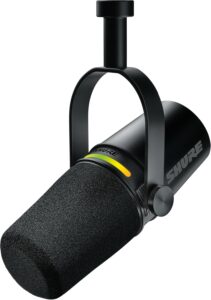
The Shure MV7+ is one of the easiest USB microphones to recommend for podcasting, streaming, YouTube, and voice recording. It’s a dynamic cardioid microphone designed around close vocal recording.
That’s important if you’re working in an ordinary bedroom or office. A highly sensitive condenser microphone can capture your voice in great detail, but it may also reveal more of your room. Computer fans, air conditioning, keyboard noise, traffic, and room reflections can all become part of the recording.
The MV7+ is designed to focus heavily on the person speaking directly into it. It also gives you both USB-C and XLR outputs.
You can start by connecting it directly to your computer through USB. If you eventually buy an audio interface or mixer, you can use XLR instead.
Shure also includes several digital features aimed at making recording easier. Auto Level Mode automatically manages microphone gain. There’s a real-time denoiser for background noise and a Digital Popper Stopper designed to control plosive sounds. You also get a 3.5 mm headphone connection for monitoring.
2. RØDE NT1 5th Generation – Best USB Microphone for Vocals
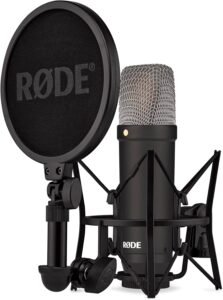
If you’re primarily recording singing and instruments, the RØDE NT1 5th Generation is a different kind of USB microphone. It’s a large-diaphragm condenser. That makes it much more like a traditional studio microphone than a gaming or podcasting USB mic.
The NT1 is designed to capture detail. RØDE specifies an extremely low self-noise level of only 4 dBA, making it particularly useful for quieter recordings.
The microphone can also handle high sound levels, so it isn’t limited to soft vocals. Its most interesting feature is connectivity. The NT1 5th Generation has both USB-C and XLR.
Connect it directly to your computer through USB and you can use the microphone’s internal preamp and analog-to-digital conversion.
Connect through XLR and it behaves more like a traditional studio condenser microphone with an external audio interface. The USB connection also supports up to 192 kHz conversion and 32-bit float recording.
For musicians who want professional studio flexibility without immediately buying an audio interface, it’s an excellent option.
3. Elgato Wave:3 MK.2 – Best USB Microphone for Streaming
Streaming creates a slightly different set of requirements. Yes, your microphone needs to sound good. But managing everything else happening on your computer is equally important.
The current Wave:3 MK.2 is a USB condenser microphone designed specifically for streamers and creators. It uses a cardioid pickup pattern and records at 24-bit/48 kHz.
Elgato also includes its Wave FX Processor with onboard DSP and Clipguard protection.
Clipguard is particularly useful for streamers because people don’t speak at exactly the same volume all the time.
Maybe you’re speaking normally one second and shouting because something ridiculous happened in the game the next.
The microphone’s processing is designed to help protect against sudden clipping.
There’s also Auto Gain, tap-to-mute functionality, a headphone jack, and integration with Elgato’s Wave Link software.
4. Audio-Technica AT2020USB-X – Best Studio-Style USB Microphone
Audio-Technica’s AT2020 has been a popular entry-level studio condenser for years. The AT2020USB-X takes that general idea and makes it much easier to use with a computer.
Instead of needing a separate audio interface and phantom power, you connect the microphone digitally. That makes it attractive to people who want a more traditional studio microphone experience without building an entire XLR setup.
A condenser microphone like this can be excellent for vocals, acoustic instruments, narration, and voiceovers. But remember that sensitivity works both ways.
It can capture the details in your voice. It can also capture the echo in an empty bedroom. For the best results, use it in a reasonably quiet room and keep unnecessary noise under control.
If you’re primarily recording detailed studio material rather than gaming in a noisy room, this style of USB condenser microphone makes a lot of sense.
5. Shure MV6 – Best USB Microphone for Beginners
If the MV7+ is more microphone than you need, consider the Shure MV6. It’s designed around gaming, streaming, and straightforward desktop recording.
The dynamic design is particularly appealing for beginners because home recording environments are rarely perfect.
Maybe your computer is sitting two feet away. Maybe there’s an air conditioner running. Maybe your walls are completely untreated.
Using a dynamic microphone close to your mouth can help make your voice more prominent relative to those background sounds.
Shure also provides automatic processing features that reduce how much technical knowledge you need when starting.
That means less time worrying about gain and processing and more time actually recording.
For someone buying their first serious USB microphone for gaming or streaming, that’s exactly what you want.
6. Samson Q2U – Best Budget USB Microphone
The Samson Q2U remains one of the most practical choices for someone who doesn’t want to spend much. It’s a dynamic cardioid microphone with both USB and XLR outputs.
That combination is the main reason it’s so useful. Start with USB. Connect the microphone directly to your computer and record your podcast.
Later, if you build a more advanced studio, connect the same microphone to an audio interface through XLR. The Q2U also includes a headphone connection for direct monitoring.
Another advantage is that it’s normally sold with several useful accessories, including cables and a small desktop stand.
7. RØDE NT-USB+ – Best USB Condenser for General Recording
If you want a traditional USB condenser without needing XLR, the RØDE NT-USB+ is another strong option. It’s designed for recording directly to computers and compatible mobile devices.
If you have a quiet room and want a natural, clear recording, a condenser microphone can be an excellent choice.
The disadvantage is exactly the same thing. It’s sensitive. A noisy room may become more obvious.
For creators with a reasonably controlled recording space, though, the NT-USB+ provides a straightforward way to get studio-style recording without an external interface.
Final Thoughts
For most podcasters and spoken-word creators, I’d choose the Shure MV7+. For streaming, the Elgato Wave:3 MK.2 offers an excellent combination of microphone hardware and software tools.
For singing and instruments, choose the RØDE NT1 5th Generation.
For studio-style recording at a lower price, consider the Audio-Technica AT2020USB-X. And for beginners who want maximum value, the Samson Q2U is difficult to beat.