


AKG has been making headphones for decades. Walk into a recording studio and there’s a decent chance you’ll find a pair somewhere.
The company is particularly well known for studio headphones. Some models are designed for recording. Others are better for mixing and critical listening. And a few are inexpensive enough for someone building a first home studio.
That’s where choosing an AKG headphone gets confusing. The K240 Studio is very different from the K371. The K702 is excellent for certain jobs but a poor choice for others. Spending more doesn’t automatically get you the right headphone.
What is the Best AKG Headphones?
Here are my list of the best AKG headphones and where each one makes the most sense.
1. AKG K371 – Best Overall AKG Headphones
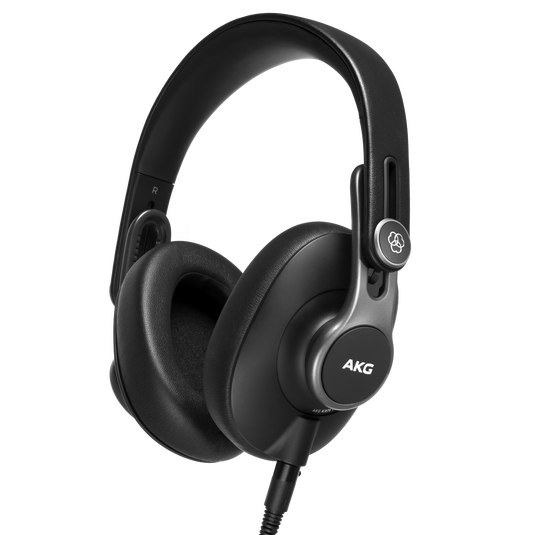
If I could recommend only one AKG headphone to most people, I’d choose the K371. It’s one of the most versatile models in the company’s professional lineup.
The K371 uses a closed-back, over-ear design. That makes it suitable for recording because less sound escapes from the earcups and reaches your microphone. AKG equips the K371 with 50 mm drivers and lists a frequency response of 5 Hz to 40 kHz.
It also has a 32-ohm impedance, which makes it relatively easy to use with a wide variety of equipment. You don’t necessarily need a huge dedicated headphone amplifier. Another feature I like is the detachable cable system.
AKG includes multiple cables, which is useful when moving between a desk, audio interface, and portable setup.
The headphones also fold, making them easier to carry than some large studio models. For recording, editing, podcasting, and general listening, the K371 offers an excellent balance.
Best for: Home studios, podcasting, recording, editing, and general listening.
2. AKG K702 – Best AKG Headphones for Mixing
If mixing is your priority, I’d look at the K702. These are open-back headphones. That’s an important distinction.
Unlike closed headphones, an open-back design allows sound to pass through the earcups. The disadvantage is sound leakage.
People around you can hear what you’re listening to, and a microphone sitting nearby may capture it.
That’s why I wouldn’t use the K702 for tracking vocals. But mixing is different. Open-back headphones can create a wider, more natural sense of space. That can make it easier to judge stereo positioning, reverb, and other details in a mix.
AKG lists the K702 with a frequency bandwidth of 10 Hz to 39.8 kHz and a 62-ohm impedance. They’re large headphones designed more for sitting at a studio desk than walking around town. If you mainly need headphones for critical listening and mixing, that’s perfectly fine.
Best for: Mixing, mastering, and critical listening.
3. AKG K240 Studio – Best Budget AKG Studio Headphones
The K240 Studio is probably one of AKG’s most recognizable headphones. It’s also surprisingly affordable. Unlike the K371, the K240 Studio isn’t completely closed. It uses a semi-open design.
That gives it some characteristics associated with open headphones while still being slightly more controlled than a fully open model. The K240 Studio has a 55-ohm impedance and a frequency range of 15 Hz to 25 kHz.
It also uses a self-adjusting headband that gives the headphones their classic AKG appearance.
For the price, they’re an excellent introduction to studio headphones. But remember the semi-open design. Sound can leak.
If you’re recording a singer in front of a sensitive condenser microphone, I’d rather use a closed-back headphone.
For editing, learning to mix, practicing instruments, or working in a home studio, the K240 Studio remains a very useful budget option.
Best for: Beginners, editing, home studios, and budget mixing.
4. AKG K361 – Best Affordable Closed-Back AKG Headphones
Think of the K361 as a more affordable alternative to the K371. The basic idea is similar. It’s a closed-back professional studio headphone designed for monitoring and content creation.
The K361 uses 50 mm drivers and has a 32-ohm impedance. Its frequency response is listed at 15 Hz to 28 kHz. Like the K371, the K361 folds for transportation and uses detachable cables.
That’s useful if you’re recording outside a permanent studio. The closed-back design also makes it a better choice than the K240 Studio when you’re sitting directly in front of a microphone.
The K371 is the model I’d choose if the price difference isn’t a problem. But if you’re trying to keep your studio budget under control, the K361 gives you many of the practical advantages that make the K371 appealing.
Best for: Budget recording, podcasting, and home studios.
5. AKG K712 PRO – Best Premium Open-Back AKG Headphones
If you want to move higher up AKG’s open-back lineup, consider the K712 PRO. These headphones are aimed at critical listening, mixing, and mastering. Like the K702, the K712 PRO uses an open design.
You get the spacious presentation that makes open-back headphones appealing for detailed studio work. AKG designed the K712 PRO with long sessions in mind.
The large earcups surround your ears, and the headband distributes the headphone’s weight rather than concentrating pressure in one place. Comfort becomes extremely important when you’re editing or mixing for four hours.
Even an amazing-sounding headphone isn’t useful if you want to rip it off your head after 30 minutes. The K712 PRO isn’t something I’d buy primarily for podcast recording. It’s much more interesting for the person doing the editing and mixing afterward.
Best for: Serious mixing, mastering, and long studio sessions.
6. AKG K92 – Best AKG Headphones for Beginners
Maybe you’re putting together your first recording setup. You already need a microphone. Then there’s the audio interface. An XLR cable. A microphone stand. Possibly a pop filter. Suddenly the budget is disappearing quickly. You don’t necessarily need expensive headphones too.
The AKG K92 is a closed-back headphone designed to provide an affordable entry into studio monitoring.
The closed construction makes it practical for recording. That’s important.
If you’re wearing headphones while talking into a microphone, you want to reduce sound leakage as much as reasonably possible.
The K92 isn’t going to replace AKG’s higher-end models for critical professional mixing. That’s not really the point.
It’s an inexpensive way to monitor a recording without using wireless earbuds or ordinary laptop speakers. For a first podcast or home recording setup, that may be all you need.
Best for: Beginners and inexpensive home recording setups.
7. AKG K52 – Best Cheap AKG Headphones
If your budget is extremely tight, look at the K52. This is another closed-back model from AKG’s more affordable studio range. It has large over-ear cups, a self-adjusting headband, and a straightforward wired design.
There’s nothing particularly complicated here. And that’s fine.
For recording, you mainly need headphones that allow you to hear your microphone and backing audio without creating excessive sound leakage into the microphone.
The K52 is the type of headphone I’d consider for a small podcast studio where you need several pairs. Buying four premium headphones can become expensive very quickly.
Affordable monitoring headphones let every guest hear the conversation without destroying your equipment budget.
Best for: Tight budgets and multi-person podcast studios.
Which AKG Headphones Are Best for Podcasting?
For podcasting, I’d choose the AKG K371. The closed-back design is the main reason. When you’re recording a podcast, your headphones are usually only a short distance from your microphone.
If you’re interviewing someone remotely, their voice is playing through your headphones while you’re speaking.
You don’t want that sound leaking out and being recorded again by your microphone. Closed headphones help.
The K371 also has a relatively low 32-ohm impedance, making it practical with many audio interfaces and podcast consoles.
If the K371 costs more than you want to spend, consider the K361. And for a studio where you need several inexpensive pairs for guests, the K92 or K52 can make more sense.
Which AKG Headphones Are Best for Mixing?
I’d look at the K702 or K712 PRO. Their open-back designs are better suited to critical listening.
When mixing, you want to understand where sounds sit in the stereo image. Is the guitar too far left? Does the reverb make the vocal feel too distant? Is your podcast intro music overpowering the narration?
A spacious open-back headphone can make these decisions easier.
But don’t use open headphones when recording directly beside a microphone unless you have a good reason. They leak sound by design.
Open-Back vs Closed-Back AKG Headphones
This distinction matters more than most specifications. Closed-back headphones seal the outside of the earcup. That improves isolation and reduces leakage.
Use them for recording. The K371, K361, K92, and K52 fall into this category. Open-back headphones allow air and sound to move through the earcup. They generally provide a more spacious listening experience, but they provide little isolation.
The K702 and K712 PRO are examples. Use them for mixing and critical listening in a quiet room.
Then there’s the K240 Studio. It’s semi-open. Think of it as sitting somewhere between the two approaches.
If you’re buying only one headphone for everything, I’d choose closed-back because it’s more versatile.
Are AKG Headphones Good for Studio Recording?
Yes. Studio headphones are one of the areas where AKG has built a particularly strong reputation. But choosing the correct model matters.
For tracking vocals or recording podcasts, use a closed-back model. For mixing, open-back models become more attractive. Also remember that headphones are only one monitoring tool.
A mix can sound perfect through your studio headphones and terrible through a phone speaker. Always check finished work on several playback systems when possible.
Are AKG Headphones Good for Music Listening?
Absolutely. You don’t need to own a recording studio to enjoy studio headphones.
In fact, some people prefer them because they want to hear music without exaggerated bass or artificial processing.
The K371 is probably the easiest recommendation for someone who wants a headphone for both work and normal music listening.
Open-back models such as the K702 can also sound excellent at home. Just remember that open headphones aren’t private.
If someone is sitting beside you, they’ll probably hear your music. You may hear them too. That makes open headphones a poor choice for commuting, airplanes, or noisy offices.
Wired vs Wireless AKG Headphones
For studio work, I’d choose wired headphones. Wireless is convenient for everyday listening. But recording is different. Bluetooth can introduce latency.
That means the sound reaching your headphones can be slightly delayed. If you’re monitoring your own voice while recording, even a small delay can become extremely distracting.
A wired connection is simple. Plug the headphones into your audio interface. Listen. No pairing. No batteries. No connection problems. For studio equipment, boring reliability is a feature.
Best AKG Headphones: Which Should You Buy?
For most people, my overall choice is the AKG K371. It’s closed-back, foldable, relatively easy to drive, and versatile enough for recording, podcasting, editing, and everyday listening.
For mixing, I’d choose the AKG K702. If you want a more premium open-back model, consider the K712 PRO.
For someone building a studio on a budget, the K240 Studio remains one of AKG’s most interesting affordable options.
And if you’re recording a podcast and simply need inexpensive closed headphones for yourself or several guests, look at the K92 or K52.
Final Thoughts
There isn’t one AKG headphone that’s perfect for everyone. That’s actually a good thing. Someone recording vocals has different needs from someone mixing an album.
A podcaster has different needs from someone listening to music alone in a quiet room. Start by deciding whether you need open or closed headphones.
For recording and podcasting, choose closed-back. For dedicated mixing and critical listening, consider open-back. Then think about comfort, impedance, price, and portability.
For most people who want one pair capable of handling several jobs, the AKG K371 is my best overall recommendation.
But if you’re building a serious mixing setup, I’d move toward the K702 or K712 PRO.
The important thing isn’t buying AKG’s most expensive headphone. It’s buying the one designed for the work you’re actually doing.